
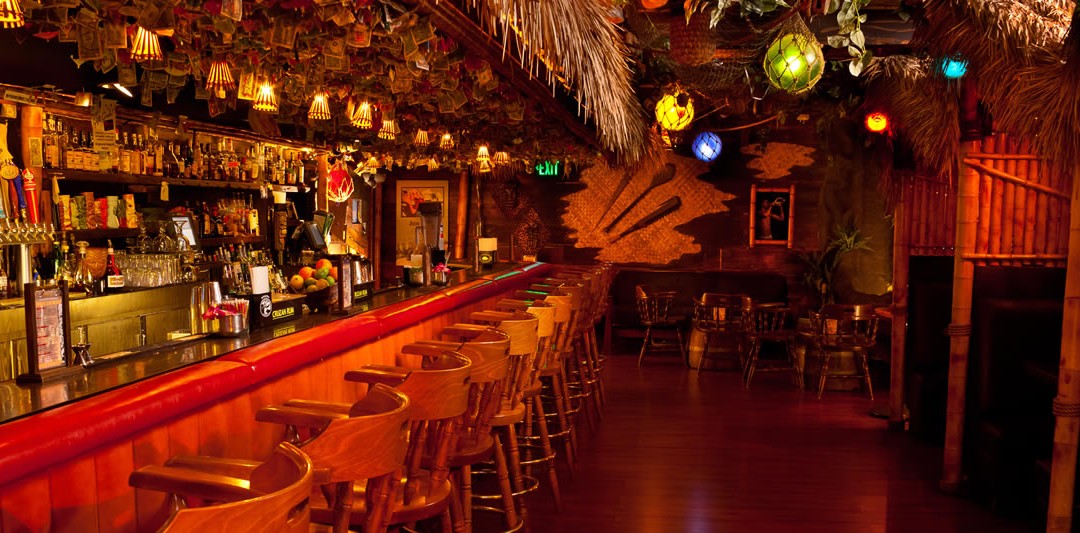
The Mai Tai sitting on the bamboo bar is flawlessly balanced. The hand-carved pufferfish lamps cast a warm, golden glow across the room, and the scent of toasted cinnamon hangs in the air. But up on the corner screen, a blindingly bright infomercial for car insurance blares with harsh studio lighting. The immersive illusion shatters instantly, and the energy in the room completely deflates.
The exact same Mai Tai sits on the bamboo bar. The same pufferfish lamps glow. This time, the screen displays faded 16mm footage of 1960s surfers riding massive waves in Oahu. The entire room transforms, pulling everyone deeper into the fantasy, anchoring them in the escapist atmosphere that tiki culture demands.
The Screen Is Part of the Décor — Not an Afterthought
Most bars treat televisions as basic utilities. They exist merely to fill awkward silences, give solitary drinkers something to stare at, or broadcast whatever major sporting event happens to be on. In a properly designed tiki lounge, the screen functions as a crucial design element, carrying the exact same weight as the hand-carved idols, the woven lauhala matting, and the glass floats hanging from the ceiling.
What plays on that screen either reinforces the meticulously built world or breaks it entirely. We rely heavily on visual input to anchor ourselves in a specific place and feeling. When the visual atmosphere aligns perfectly with the physical environment, the psychology of immersion takes over. Guests stop checking their phones. They stop worrying about their commutes. The screen acts as a window to the world you are trying to simulate, rather than a harsh reminder of the world they are trying to escape.
What Kills a Tiki Night Instantly
Nothing destroys an escapist tropical vibe faster than local news anchors detailing traffic jams and political scandals. A football game that nobody requested has the exact same destructive power. Anything featuring harsh studio lighting, scrolling tickers, and slick corporate aesthetics clashes violently with a space designed to mimic 1955 Polynesia.
The jarring effect of modern American television immediately yanks patrons out of their island fantasy and drops them right back into their stressful daily lives. We learned this the hard way during our early days. We would occasionally leave screens on default cable channels during slow afternoons, before quickly realizing how badly it damaged the atmosphere. A guest sipping a complex, rum-heavy Navy Grog does not want to look up and see a pharmaceutical commercial. It fundamentally ruins the psychological transport that a great tiki bar provides.
The Content Categories That Actually Work
Curating the right visuals requires deliberate choices and a deep understanding of mid-century aesthetics. Vintage travel reels from the Pacific Islands and the Caribbean consistently hit the mark. Their slightly grainy, technicolor look matches the nostalgic tiki vibe perfectly, showing scenes of palm trees, old airliners, and pristine beaches.
Underwater ocean footage provides another excellent option. The deep blues, slow movements, and otherworldly sea life create a mesmerizing backdrop that encourages guests to relax and settle in. Classic surf culture films from the 1960s and 70s also work beautifully, alongside live music recordings from Hawaiian, reggae, and calypso traditions. Surprisingly, even mundane weather content from tropical regions—like live beach cams in Fiji or Tahiti—adds a brilliant touch of realism that works every single time. It gives the room a subtle pulse without demanding constant attention.
The Live Content Problem — And How We Solved It
While vintage footage creates a great baseline, a lively lounge environment needs dynamic live content to maintain energy, especially on busy weekends. We wanted to broadcast live music streams from the Caribbean, Pacific Island cultural festivals, and international surf competitions as they happened. However, accessing this specific international content through standard American cable is essentially impossible.
A massive channel gap exists between what standard domestic cable offers and what actually fits an authentic tiki atmosphere. Working with iptv canada opened up access to international live content we simply couldn’t get any other way. Suddenly, we had direct feeds to Caribbean broadcasts, obscure Pacific Island programming, and cultural events that major US cable companies completely ignore. This transformed our screens from static video loops into active windows overlooking the exact regions our cocktails celebrate.
How We Curate What Plays When
You cannot play the exact same content at 5:00 PM that you play at midnight. Early evening crowds require different visuals than late-night revelers. As the sun sets and the cocktail menu shifts from light afternoon refreshers to potent, rum-heavy nightcaps, the screen content shifts right alongside it.
The transition moves from ambient, slow-moving underwater visuals during happy hour to highly engaging surf competitions or energetic live music festivals as the night peaks. Our floor managers actively monitor the room’s energy, making real-time decisions about what plays next. They know exactly when to swap the relaxing coral reef footage for an upbeat reggae concert. This ensures the visual tempo always matches the mood of the crowd, keeping the energy exactly where it needs to be.
The Canadian and International Angle Nobody Expects
Forbidden Island naturally draws a genuinely international crowd, but the Bay Area also hosts one of the largest Canadian expat communities in the United States. These visitors specifically come for the warm, escapist atmosphere, but they absolutely light up when they catch a familiar broadcast from home.
Streaming Canadian IPTV content alongside our regular Pacific Island programming allows us to cover both sides of that international crowd in a single, streamlined setup. It creates unexpected moments of connection for guests who never anticipated seeing a slice of their home country while drinking a Zombie in an Alameda tiki bar. This highly specific programming choice turns first-time international visitors into loyal regulars.
Sound and Screen Together — The Full Sensory Calculation
Visuals only solve half the equation; audio integration requires careful, constant calculation. We constantly balance the audio from the screen against the bar’s overarching background music. Sometimes the screen’s sound needs to take over completely, like during a live Hawaiian music performance where the crowd is actively engaged with the broadcast.
Other times, the screen must stay completely silent, allowing our curated exotica and lounge playlists to dominate the room. One of the most effective combinations pairs silent underwater reef footage on the screens with atmospheric Martin Denny tracks playing over the main speakers. Getting this auditory balance wrong is just as damaging to the vibe as putting the wrong content on the screen. Too much screen audio creates sports-bar chaos; too little during a live event creates an awkward disconnect.
What We’ve Learned After Years of Getting It Wrong and Right
The specific nights where things went wrong taught us the most valuable lessons about environmental design. During one notable private party, a bartender accidentally switched the screen to a loud, aggressive reality television show, nearly derailing the entire event’s tropical theme before management caught the mistake.
Conversely, we clearly remember the first night we got the formula completely right, running a curated marathon of 1960s surf documentaries that kept guests captivated for hours, resulting in record-breaking dwell times. The most practical lesson distilled from all of this trial and error is that expanding your media toolkit with flexible iptv channels gives you the ability to adapt to any crowd or mood instantly. You simply cannot rely on default broadcasting if you want to build and protect a unique, highly themed environment.
Close on the Room, Not the Tech
Ultimately, the screen is just one piece of something much larger. When you walk into Forbidden Island, the goal is total immersion. When everything works together perfectly—the woven bamboo walls, the complex blend of aged rums in your glass, the warm amber lighting, and the exact right visuals glowing in the corner—the room stops being a standard bar in Alameda. It becomes somewhere else entirely. The modern world fades away, replaced by a timeless, tropical escape that feels wonderfully, perfectly complete.